88.0% against 53.2% on completeness. 83.0% against 50.8% on health decision helpfulness. Those are OpenAI's own HealthBench Professional figures for GPT-5.6 Sol measured against physician-written answers, and they are the reason the model behind ChatGPT's health features is worth paying attention to.
Because as of the week of July 23, that model is not the same for everyone.
What actually shipped
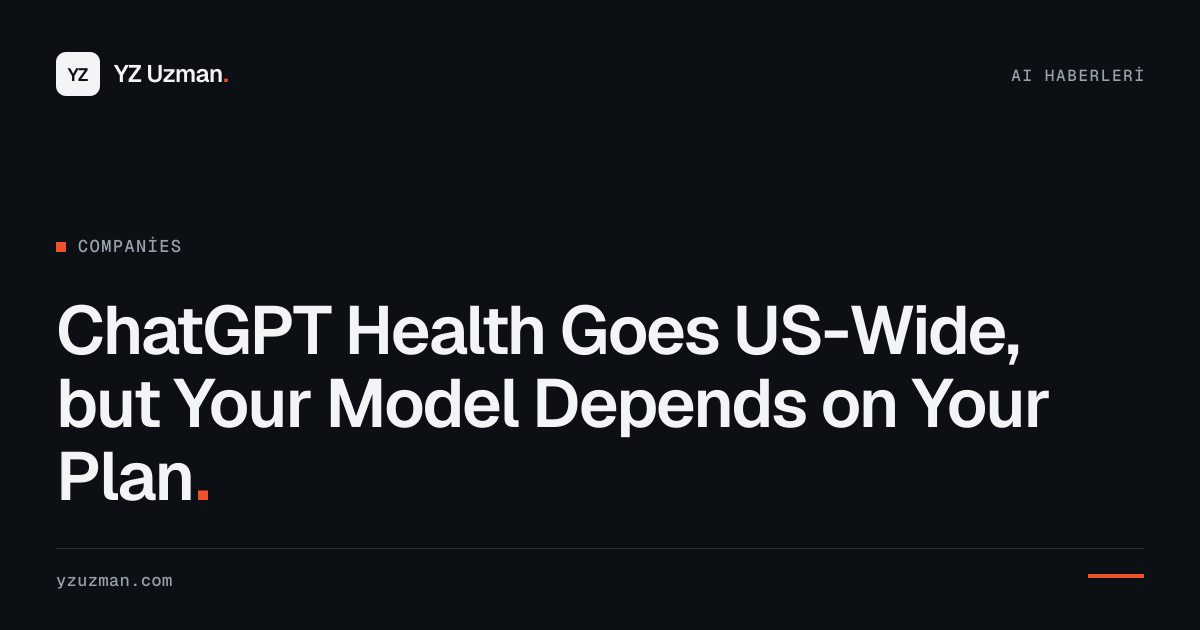
OpenAI made ChatGPT Health available to logged-in US users aged 18 and over, on web and iOS, across every subscription level: free, Go, Plus and Pro. Users can connect personal health apps including Apple Health, MyFitnessPal and Function, and pull in medical records from Epic and Oracle Health systems, plus platforms like One Medical and Function Health.
The company also moved health capability out of its dedicated hub and into ordinary conversation, on the reasoning that 70% of health-related queries were happening outside the hub anyway. So you can now ask about an ingredient or an allergy in a normal chat and have your own health data inform the answer.
OpenAI is explicit that the service is "not intended for use in the diagnosis or treatment of any health condition," and says it does not use this data to train its models.
Where the tier difference shows up
Feature access is not gated by plan. Model routing is. According to reporting from the-decoder, free users get health answers from GPT-5.5 Instant, while paying subscribers are routed to GPT-5.6 Sol, the stronger model and the one those HealthBench numbers describe.
This distinction is easy to blur, and several write-ups have blurred it. OpenAI did not carve out a premium health product. It shipped one product on top of a routing layer that already differed by tier, and health is simply the domain where that difference is hardest to shrug off. A weaker model writing a worse email is an inconvenience. A weaker model giving a less complete answer about a drug interaction is a different category of problem.
The benchmark caveat worth keeping
The 88% figure deserves the asterisk that OpenAI's own framing implies. HealthBench measures answers in a constructed test environment. A physician working with a real patient can examine them, order tests, read a full history and follow up next week. None of that is available to a benchmark, and a model beating written answers under those conditions is not the same as a model outperforming a doctor.
What the numbers do support is a narrower claim: for written health information, the gap between model tiers is measurable and large.
Where we come out on this
Tiered model quality is not new and is not scandalous on its own. Every provider routes cheaper requests to cheaper models, and someone has to pay for inference. What changes here is the domain. Once a product invites people to connect their medical records, the routing layer stops being an implementation detail and becomes a question about who gets the better answer.
For anyone building on these APIs, there is a transferable lesson that has nothing to do with health. If your product routes between models to control costs, know exactly which requests land where, and be honest with yourself about which of those requests carry real consequences when the answer is thin. Cost routing is a legitimate engineering decision. It stops being one when it is invisible to the people affected by it.
Sources: TechCrunch, the-decoder, OpenAI