Skip to content

Custom software development

We build ERP, CRM and internal systems around your workflow. We start where off-the-shelf packages stop fitting and spreadsheets and email threads can no longer carry the work.

When does custom software make sense?

Multi-branch businesses

  • Income, expenses and cash per branch

    Each branch reports its daily cash, expenses and collections into one dashboard, so management sees the current state without waiting for spreadsheets.

  • Approval flows between head office and branches

    Purchase, refund and discount requests go through a rule-based approval chain, with a record of who approved what and when.

Law and consulting firms

  • A case-file workspace

    Files, deadlines, documents and client correspondence live on one screen, and deadlines are not tracked by hand.

  • Importing data from external systems

    Data from sources such as court systems is imported and linked to the right file instead of being retyped.

Manufacturing, wholesale and distribution

  • Stock, orders and accounts

    Warehouse, order and account movements share one data model, so a product never has three different stock levels in three spreadsheets.

  • Dealer and field-team portal

    Dealers place orders and see price lists and balances; the sales team plans visits from the same system.

Service and healthcare businesses

  • Appointments and resource planning

    Specialist calendars, room or equipment use and reminders run in one flow, reducing double bookings and idle slots.

  • Client history and CRM

    Calls, proposals and service history are kept per person, so the client’s story survives team changes.

How does an order move through the system?

The value of custom software is not in the screens but in the rules between them: which amount needs whose approval, when stock is reserved, which records can never be edited. We write these decisions down with you during discovery.

The flow on the right is a typical example for a distributor taking dealer orders. Each step is a module, each transition is logged, and the point that needs a human decision is clearly marked.

Example flow: from dealer order to invoice
  1. 01Dealer places an orderFrom the mobile app or web portal, with the current price list
  2. 02Stock and credit checkItems are reserved and the dealer’s credit limit is checked automatically
  3. 03Manager approval if over limitApproval screen with reason and timestamp
  4. 04Shipping and delivery noteLands on the warehouse screen as a picking list
  5. 05Invoice and accounting syncThe record is sent to the accounting system via API
  6. 06ReportingUp-to-date views by dealer, product and region

How we approach it

01Data model first, screens second

The lifespan of an internal system is decided by its data model, not its screens. We settle how customers, products, orders and approvals relate during discovery; a poorly built data model makes every new feature more expensive two years later.

02Permissions and logs are designed up front

Who can see what, change what and approve what are treated as the foundation of the system, not settings added later. Every critical action is recorded with a timestamp and user.

03Small, frequent deliveries

Instead of one big delivery after six months, we show a working version every two weeks. Your team starts using the system early, misunderstandings get fixed while they are small, and priorities can shift with real usage.

04Code another team could take over

Code, documentation and setup steps are written so another team could take them over. We want you to be able to grow the system comfortably, not to depend on us.

What you have at the end

  • Source code and technical documentation
  • Role-based access and audit log (who did what, when)
  • Admin panel and user interfaces
  • API integrations with your existing systems
  • Test and production environments
  • Data migration from old spreadsheets and systems
  • User training and a short user guide
  • Backup, monitoring and maintenance plan

Four steps, each ending with something concrete

  1. 1Discovery

    1-2 weeks

    We map your processes, user roles and existing data. Deliverable: scope document, module list, risks and a proposal.

  2. 2Prototype

    2-3 weeks

    We make the most critical screens clickable with your real data, so your team tries them before relying on them.

  3. 3Build

    4-12 weeks

    We work in two-week cycles. At the end of each cycle you see a working version in a test environment.

  4. 4Launch and operate

    Ongoing

    We go live, migrate the data and set up monitoring and backups. Then we keep growing the system with you.

Systems we built and still run

Balapark Yönetim Sistemi

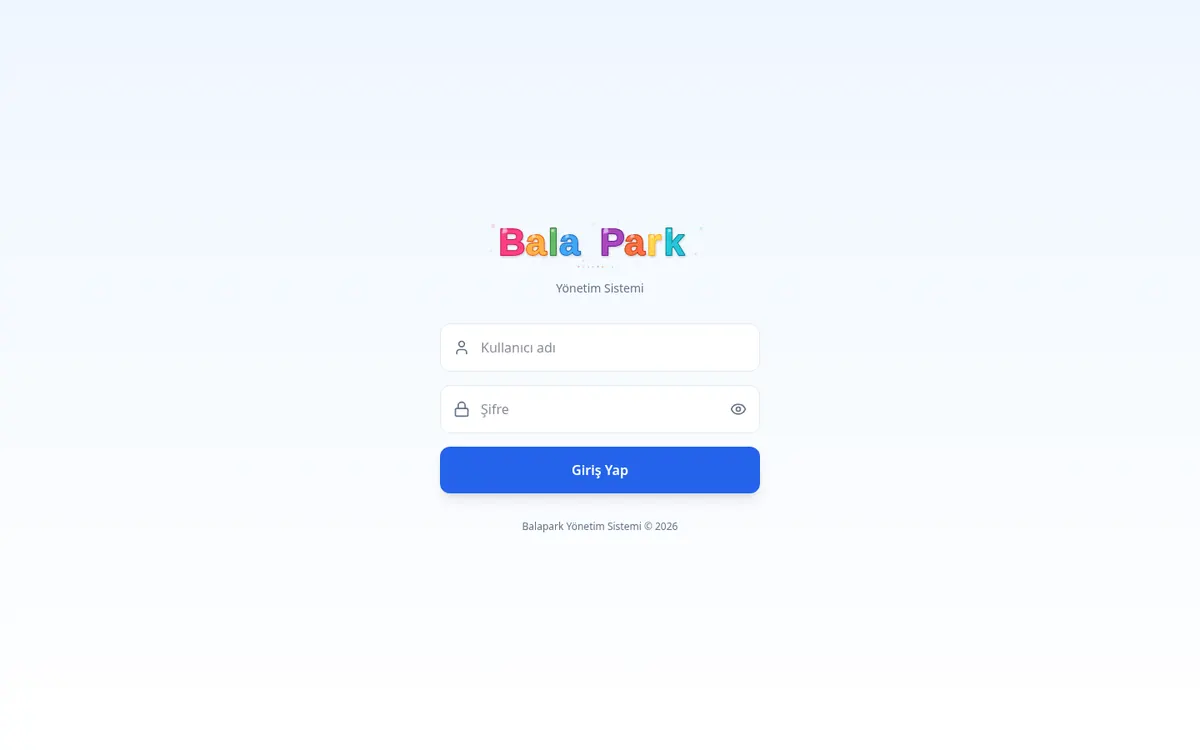
Balapark Yönetim Sistemi

Daily cash, card, ATM deposit and expense tracking for a 12-branch business, with bank matching and cash verification.

yzavukat

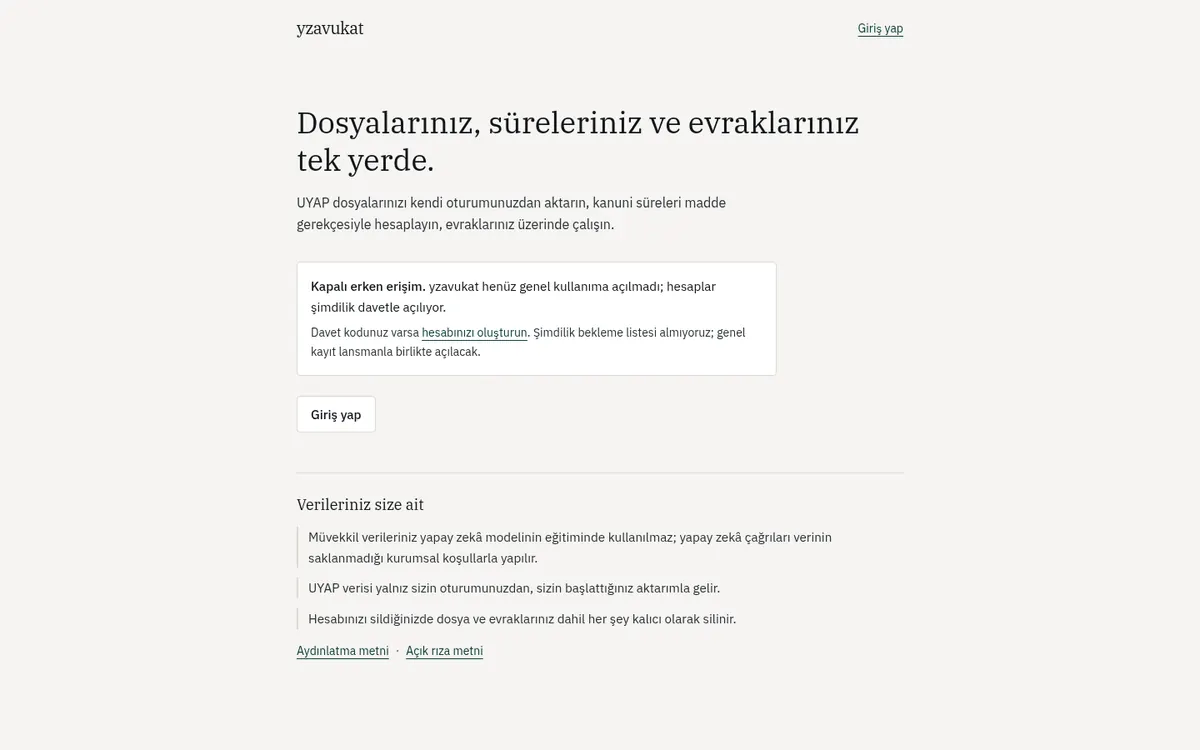
yzavukat

Case-file workspace for lawyers that imports court-system data and tracks legal deadlines.

NetRestoran

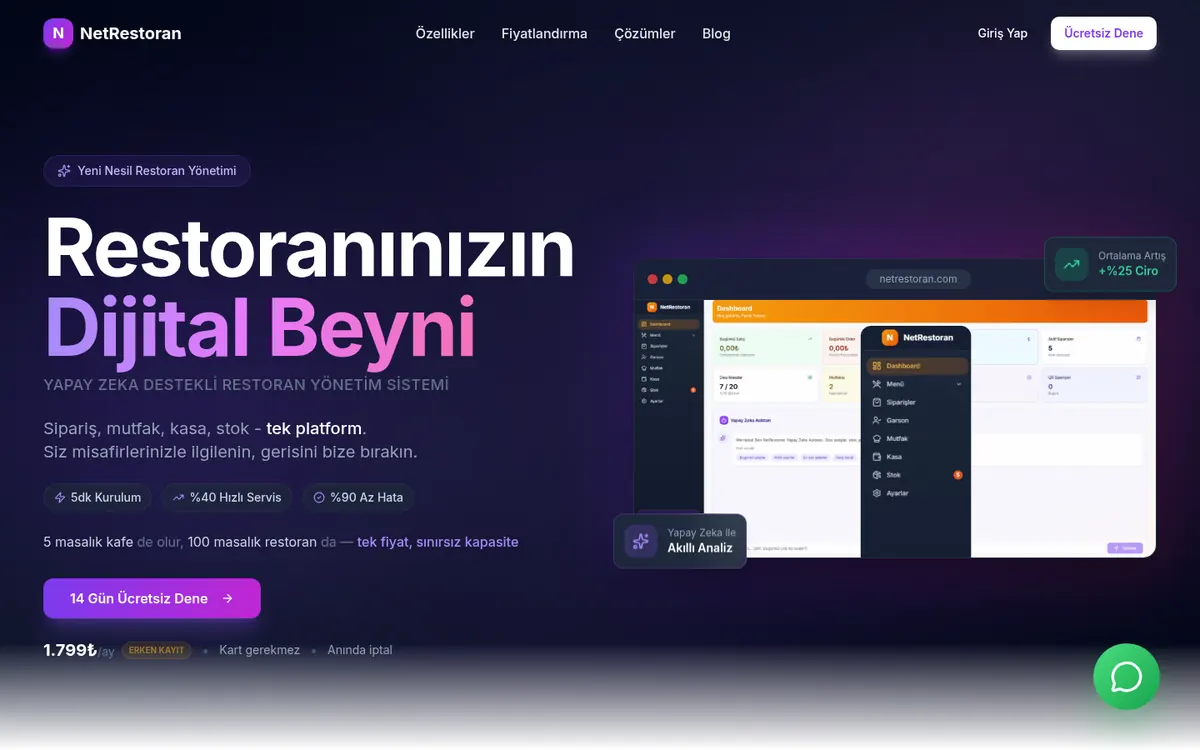
NetRestoran

Restaurant SaaS for orders, kitchen display, checkout and stock, with QR menus and AI analytics.

How is it priced?

Cost depends on the number of modules, integrations, user roles and delivery timeline. After discovery we offer either a fixed project budget or an ongoing product-team model, and we discuss which fits you alongside the discovery document.

The starting price applies to small-scope projects. The final figure comes as a written proposal after the discovery call.

Custom software projects
From ₺25,000

Questions about custom software

Why custom software instead of an off-the-shelf ERP?

Off-the-shelf packages work well for generic processes; if your business fits their assumptions, they are faster and cheaper. Custom software makes sense when a workflow, integration or rule set specific to you turns into workarounds inside a package. We make that comparison honestly during discovery.

Who owns the source code?

The source code and documentation of software built for you are handed over at the end of the project.

Can it work with our existing systems?

Yes. We integrate with accounting, payment, shipping or industry-specific systems via API. For systems without an API, we assess alternatives such as file-based import and export during discovery.

What happens to our old data?

We clean data from spreadsheets or legacy systems and migrate it into the new structure. The migration is rehearsed in a test environment before go-live.

Does it run in the cloud or on our own servers?

Either. We choose cloud or on-premise deployment with you, based on your needs, data policies and budget.

Do you provide support after launch?

Yes. We offer ongoing support for monitoring, security updates, backups, maintenance and new features, tailored to your needs.

Let’s talk about your project for 30 minutes.

In a free discovery call we listen to what you need and sketch a workable path and a rough timeline.

Start a project