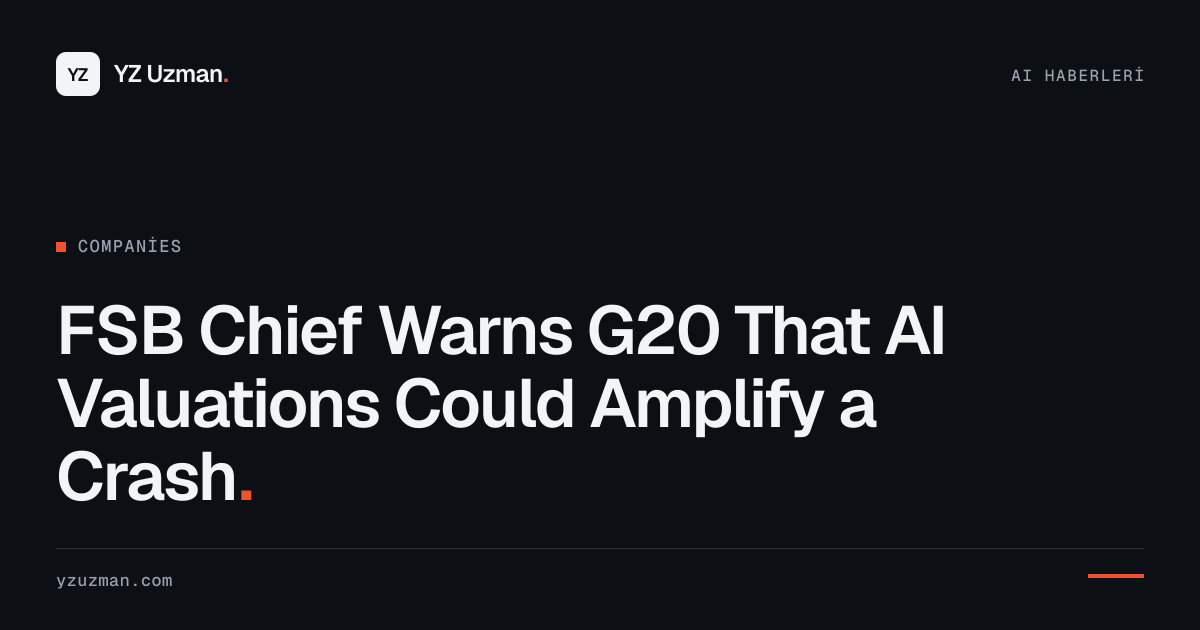
Picture a pension fund manager opening the mail on the last day of August. Inside is a letter from Andrew Bailey, governor of the Bank of England and chair of the Financial Stability Board, addressed to G20 finance ministers and central bank governors, and it reads like a checklist of everything the manager's AI-heavy portfolio is exposed to: stretched valuations, rising leverage, concentrated positions, and a web of companies invested in each other. The letter, published August 31 ahead of G20 meetings running August 31 and September 1, was written to set exactly that agenda.
Some context on the sender. The FSB was created after the 2008 crisis to watch for risks to the global financial system, and its chair's letters to the G20 are among the more consequential documents in financial diplomacy. This one contains no numbers at all. What it contains instead is a mechanism, described plainly.
The chain of fragilities Bailey describes
The problem, as the letter frames it, is not high AI valuations on their own. It is what surrounds them: growing leverage in equity markets, exposure concentrated in a small number of AI firms, leveraged funds and trend-following strategies positioned the same way, and a "growing web of investment" between AI companies and the hyperscale data center operators that host them. Bailey's phrase for the leverage build-up is that it is a feature of a "maturing financial cycle." Translated: if one major player stumbles, the cross-invested chain transmits the shock collectively rather than absorbing it piecemeal.
The second warning gets less attention but sits higher on Bailey's own priority list: frontier AI may fundamentally change the speed, scale and economics of cyber attacks, and the financial system's dependence on a handful of large technology providers concentrates that risk. A system-wide loss of confidence, in his framing, is the more immediate threat.
How seriously to take the warning
Bailey has company; similar notes have come from central bankers and large funds all summer. Then again, the same institutions warned about the internet before the dotcom crash, the bubble burst, and the internet economy grew anyway. The letter's value is not as a verdict on the technology. It is a reminder that the financial layer around AI, valuations, debt and cross-shareholdings, is more fragile than the technological layer underneath it.
The two lines that apply to ordinary businesses
- Provider concentration is your risk too. If your AI infrastructure depends on a single vendor, that vendor's financial turbulence becomes your operational problem. Keeping a second model or provider viable for critical workflows is sound engineering regardless of whether any bubble pops.
- Productivity returns are independent of market valuations. The hours an automated invoice pipeline saves you do not move with Nvidia's share price. In the dotcom era, the durable winners included the companies that bought the overbuilt infrastructure cheaply afterwards.
We read the letter as a healthy corrective rather than a reason for panic: invest in AI for the operational returns, and account separately for your financial exposure and vendor dependencies while doing it.
Sources: FSB, The Decoder